
Built on Certified Clay experts
Clay experts who build the system, not another Clay agency.
A Clay agency can build you a table in a week. The harder part is what happens after: credits that run out before the month does, tables nobody owns, and data that never reaches the CRM. We build Clay, the data enrichment and workflow platform, as a production system in your workspace, with an owner and a cost per record you can read.
Enterprise accounts / Tier 1 Waterfall running | Company | Headcount | Work email waterfall A, B, C | Signal | Fit score | Account owner | HubSpot |
|---|---|---|---|---|---|---|
| Fabrikamfabrikam.io | 1,200 | ABCjane@fabrikam.io | Hiring SDRs | 92 | Kept | Synced |
| Contoso Securitycontoso-sec.com | 640 | ABCraj@contoso-sec.com | Raised Series C | 84 | Kept | Synced |
| Northwind Cloudnorthwind.dev | 2,900 | ABCli@northwind.dev | New CRO | 77 | Kept | Synced |
| Tailspin Datatailspin.ai | 310 | ABCnull, no evidence | No signal | 41 | Kept | Not synced |
| Adventure Worksadventure.works | 4,100 | ABCsam@adventure.works | Tech change | 69 | Kept | Synced |
Top 1%
of Clay experts globally
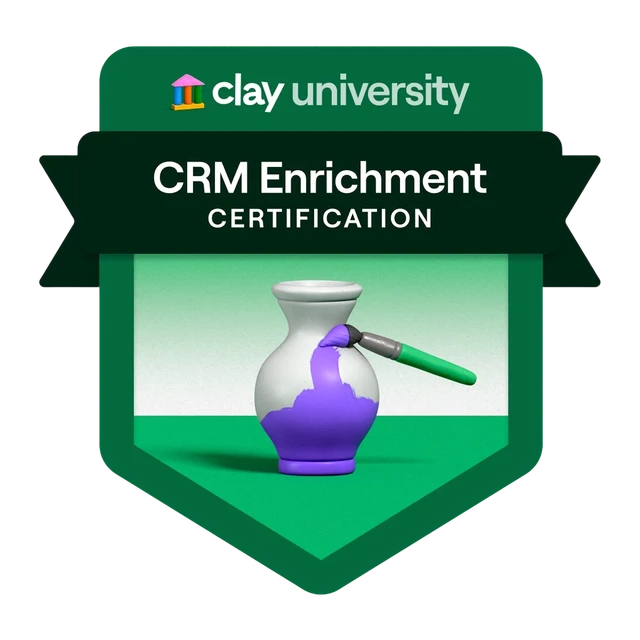
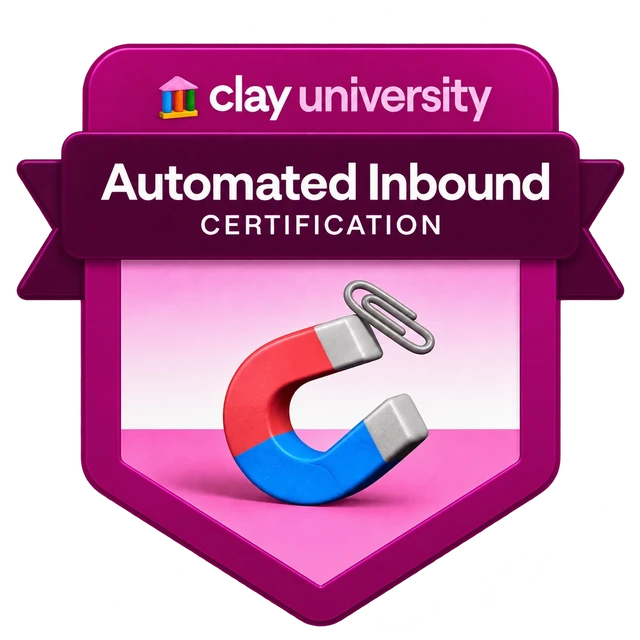
3
Clay certifications held
48,000+
CRM records scored in one build
1,369
opportunities analysed to fix an ICP
Figures from Neeraj Kumar’s work before Unkapped, published on his portfolio.
Where Clay builds go wrong
Why do Clay builds stall after launch?
For four reasons that come up again and again in public reviews and in the systems Neeraj has inherited. Each one costs credits before a single record reaches the CRM.
Swipe to see the whole diagram
Where credits leak
01
Credits run out before the month does
Spend grows faster than pipeline.
You have this if
- A column change re-runs a whole table
- AI columns run on every row
02
Tables nobody owns
The build decays when its author leaves.
You have this if
- It was built for one campaign
- There is no written spec
03
Data that stays in Clay
Reps never see the score.
You have this if
- CRM fields are empty
- Or overwritten by enrichment
04
Logic in the wrong place
Cost rises with volume, not value.
You have this if
- Nightly jobs re-enrich rows that rarely change
- Nobody can test the logic
Choosing who builds it
Clay agency, freelancer or in-house hire: which fits?
It depends on what you want to own. If you want meetings delivered, an outbound Clay agency fits. If you need one table, a freelancer fits. If you want a system your team owns and runs, hire a GTM engineer or bring us in to build it with you.
Clay is one layer of our growth systems work. Most Clay builds end in a CRM: see Clay to HubSpot, and when stable logic should move to n8n.
Who builds it
Who builds your Clay system?
Neeraj Kumar, Unkapped’s co-founder and CTPO. He documents every system he builds, including what broke and what he would change.
Clay
Top 1% of Clay experts globally, certified three times over.


Neeraj Kumar
Co-founder and CTPO, Unkapped
- A build featured on Clay’s official YouTube channel
- Invited by Clay’s education team to co-host a session
Clay systems Neeraj built before Unkapped
Customer lifecycle intelligence
Ten linked Clay systems tracking enterprise targets on hiring, funding, tech, review and 10-K signals, from prospect to win-back.
- ~1,000enterprise targets tracked
- 80%less manual research, 50+ client deployments
Signal-led outbound
A win/loss analysis that decides who gets contacted, when, and with what talking points. Taught as a public masterclass.
- 1,369opportunities analysed
- 4% vs 25%Tier 1 against Tier 2: the ICP was inverted
ICP Analyzer
A live, free tool: a provider waterfall with confidence scores and cost per source, returning null when there is no evidence.
- 48,000+CRM records scored for a PE portfolio
Candidate screening engine
Clay, Otter.ai and n8n: applicants ranked, screened by a bot and scored back to the table before a person sees them.
- Featuredon Clay’s official YouTube channel
What people say about Neeraj’s work before Unkapped
I was super impressed by the exceptional table you built and submitted for certification. Given the quality of your work, I’d love to invite you to co-host this session with me.
Sarah XuEducation & Growth Lead, Clay
Neeraj has helped us design and implement GTM systems with multiple clients. He is professional, delivers on time and is always a pleasure to work with.
Damon StewartCo-Founder & Managing Director, Earned Impact
Neeraj has been instrumental in our growth. His work always went above and beyond our expectations — he doesn’t just deliver, he thinks three steps ahead.
Kahraman YigitCo-Founder & CEO, Olive Hospitality
These systems were built before Unkapped, for a US GTM firm and its clients. Client names are withheld. Figures are Neeraj’s own, published on his portfolio (opens in a new tab).
Questions
Clay, answered plainly.
If your question is not here, bring it to the audit call. Thirty minutes is usually enough to see where your Clay spend goes.
What is a Clay agency?
A Clay agency builds and runs work in Clay, the data enrichment and workflow platform, for other companies: account lists, waterfall enrichment, signals and outbound. Some deliver meetings from their own Clay workspace. Others build systems inside yours and hand them over. We do the second, which is why we describe ourselves as Clay experts and engineers rather than an agency.
How much does Clay cost to run?
Clay charges a plan fee that includes two meters: Data Credits for data and Actions for platform work. Launch starts at $185 a month with 2,500 Data Credits and 15,000 Actions. Growth starts at $495 a month, or $446 billed annually, with 6,000 Data Credits and 40,000 Actions, and adds CRM sync. An enrichment that returns no result costs nothing. Clay bills you directly; our fee is separate.
How do we stop Clay credits running out?
Fix the build before buying more credits. Filter by ICP before enriching, order the waterfall by match rate and cost and stop at the first verified match, use your own API keys where you already hold provider contracts, run AI only on rows that need it, and test changes on a sample table. A Clay audit shows your spend by table and by provider.
Do we need Clay’s Growth plan to sync with HubSpot or Salesforce?
For Clay’s native CRM auto-sync, yes: Clay lists CRM integrations from the Growth plan upward. Teams on Launch can move data through other routes, such as an n8n workflow. Whichever route you use, the same rules apply: agree which fields Clay may fill, never overwrite a field a person owns, and test write-back on a sample first.
Who owns the Clay tables you build?
You do. Every table and workflow is built in your Clay workspace, synced to your CRM and documented in a written spec, so your team can run it or another engineer can pick it up. We take no margin, commission or referral fee on Clay or any data provider, so our advice on what to buy carries no incentive.
Should we hire a GTM engineer or bring in Clay experts?
Hire if Clay is core to your go-to-market for years and you can recruit, train and keep the person busy. Bring us in if you need the system built now, want it designed to be handed over, or want an experienced engineer alongside a new hire. Either way, what we build stays in your accounts.
Who will actually build our Clay system?
Neeraj Kumar, our co-founder and CTPO, leads every Clay build. He is in the top 1% of Clay experts globally and holds three Clay certifications. Whoever you talk to about Clay, ask who will work in your workspace and ask to see their builds; a partner badge tells you less than the work does.
How long does a Clay implementation take?
It depends on how many tables, which CRM, and how many signals the system has to act on. We give you a dated plan at the end of the audit, once we have seen your workspace, rather than a number before we have looked. Most of the time goes into agreeing field rules and testing write-back, not building tables.
Clay audit
Start with a Clay audit.
Give us access to your Clay workspace and CRM. You get your credit spend by table and provider, a review of your table architecture, a check of what actually reaches the CRM, and a priced list of fixes. Your Clay subscription stays yours.
Or email hello@unkapped.ai